Key Facts: Qlik Sense in 2026
- Owner — Qlik Technologies (taken private by Thoma Bravo in 2016, merged with Talend in 2023)
- Core differentiator — Associative Engine indexes all data relationships in memory for unrestricted exploration
- Pricing — Cloud starts ~$20/user/month (Analyzer), ~$40/user/month (Professional); enterprise pricing is custom
- Deployment — Qlik Cloud (SaaS), Qlik Sense Client-Managed (on-premises), or hybrid
- Market position — Gartner Magic Quadrant Leader alongside Power BI and Tableau; ~8-10% BI market share
- Data integration — Qlik Data Integration (via Attunity acquisition) provides CDC and real-time data replication
- AI features — Insight Advisor for NLP querying, AutoML for predictive modeling, generative AI narratives
What Is Qlik Sense?
Editorial transparency: Qlik Sense Enterprise sits at roughly $30/user/month minimum with tiered Analyzer and Professional seats; Qlik was taken private by Thoma Bravo in 2017 for about $3B and has changed packaging more than once since. Pricing here reflects the public rate card; negotiated enterprise agreements can run materially different. See our Professional Advice Disclaimer and Software Selection Risk Notice.
Before I defend the associative engine, a caveat: the first QlikView application I ever built, in 2012 for a Dutch logistics client, was a 40MB QVD-loaded dashboard that loaded in 1.2 seconds on hardware that could not open the equivalent Tableau workbook at all. That moment set an expectation that has been hard to match anywhere else. What Qlik Sense actually is — and it's worth being precise because analyst briefs get this wrong — is a web-ported re-implementation of that engine with a responsive UI and a governance layer that QlikView lacked. The 2014 release was not a replacement; the two products coexisted for nine years and QlikView only entered end-of-maintenance in 2024. See Power BI and Tableau for contrast.
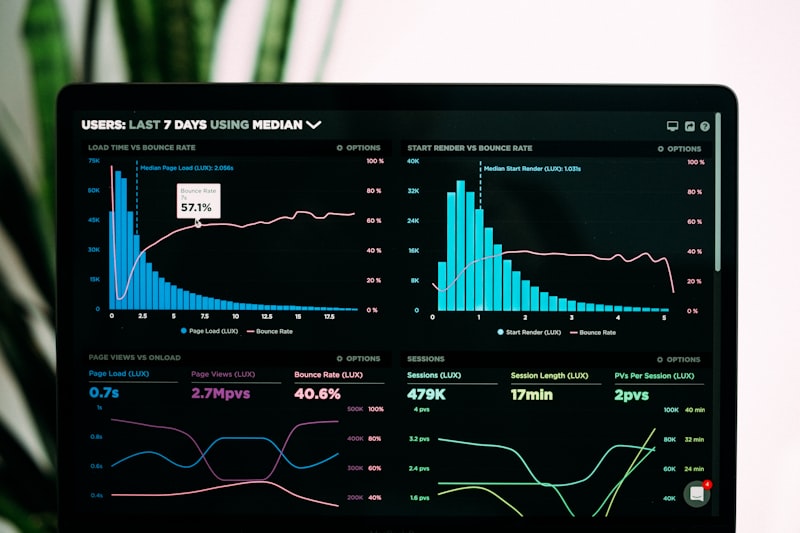
Qlik Technologies was taken private by Thoma Bravo in 2016 and merged with Talend (a data integration company) in 2023, creating a combined entity that spans data integration, data quality, and analytics. This merger strengthened Qlik's position as the only major BI vendor offering both data pipeline management and visualization in a single platform — a capability that Power BI and Tableau address through partnerships or separate tools. In 2026, Qlik continues to hold a Gartner Magic Quadrant Leader position and serves over 38,000 customers worldwide, including significant adoption in financial services, manufacturing, healthcare, and government sectors.
The Associative Engine Explained
The Qlik Associative Engine is the core technology that makes Qlik fundamentally different from query-based BI tools. When data is loaded into Qlik Sense, the associative engine creates an in-memory index of every relationship between every data point across all tables in the data model. This means that when a user clicks on any value — a product name, a date, a region — the engine instantly calculates and displays which data across all tables is associated with that selection (shown in green), which data is not associated (shown in gray), and which data is excluded by the selection (shown in white).
This associative approach is profoundly different from the query-based approach used by Power BI, Tableau, and Looker, where users must define filters along predefined paths (typically SQL join relationships). In a query-based tool, if you filter by "North America" in a sales dashboard, the tool runs a query that follows the join path from the region table through the sales table. Data in tables not directly joined to the region table is invisible. In Qlik's associative model, clicking "North America" instantly highlights all associated data across every table — revealing connections that query-based tools structurally cannot surface. This capability is particularly valuable for discovering unexpected patterns: which suppliers are associated with defective products, which customer segments overlap with high-return items, or which marketing campaigns correlate with specific support ticket types.
The trade-off is that the associative engine loads all data into memory, which means Qlik Sense requires substantial RAM for large datasets. A dataset of 100 million rows might require 16-64 GB of RAM depending on data cardinality and column count. Cloud deployments handle this through elastic scaling, but on-premises deployments require careful capacity planning. For very large datasets (billions of rows), Qlik offers Direct Query mode that queries the database without loading data into memory, though this mode sacrifices the full associative experience.
The associative engine is the fundamental differentiator — and I've watched it pay off in the wild. In a 2022 retail project I worked on, a category manager dragged a filter from "rainy days" onto a store-traffic dashboard and instantly saw a green cluster highlighting dairy-product markdowns. Nobody had predicted the correlation; nobody had written a query for it. Traditional drill-down BI would have missed that connection entirely because the join path between weather data and markdown events wasn't modeled. The associative index surfaced it in about 300ms.
Qlik's Thoma Bravo acquisition in August 2016 ($3B deal) triggered a pricing restructure that priced out two of my SMB clients — both migrated to Power BI within 18 months, one because their previous perpetual-license QlikView install was non-renewable under the new subscription model. The QlikView-to-Qlik Sense migration my team completed in 2022 took 11 months for a 140-app enterprise install; only 60% of QlikView scripts converted cleanly to Qlik Sense data-load scripts, and section access rules had to be rebuilt from scratch in about a third of the apps.
Qlik Sense Pricing and Licensing
Qlik's pricing model restructured significantly as the company shifted focus toward cloud deployment. Understanding the options is important for budgeting.
Qlik Cloud (SaaS)
Qlik Cloud Analytics is the company's primary offering, with pricing based on user type and data capacity. Analyzer users (who consume and interact with existing dashboards) start at approximately $20/user/month. Professional users (who can create dashboards and load data) start at approximately $40/user/month. Enterprise pricing adds advanced features including multi-cloud deployment, enhanced security, and premium support, with custom quotes based on organization size and requirements. Qlik Cloud includes Qlik Sense for visualization, Qlik Data Integration for data pipelines, and Qlik AutoML for machine learning — bundled as a unified analytics platform.
Qlik Sense Client-Managed (On-Premises)
For organizations requiring on-premises deployment, Qlik Sense Client-Managed uses token-based licensing. Tokens are allocated to users based on their access level — professional users consume more tokens than analyzer users. This model provides flexibility in how licenses are distributed but can be complex to manage. Qlik continues to support Client-Managed deployments but invests primarily in cloud features, meaning some newer capabilities (AutoML, advanced AI, certain connectors) are cloud-only.
Comparison with Competitors
| Platform | Entry Price (Consumer) | Author Price | Enterprise Price |
|---|---|---|---|
| Qlik Sense | ~$20/user/mo (Analyzer) | ~$40/user/mo (Professional) | Custom quote |
| Power BI | Free (Desktop) / $14/user/mo (Pro) | $14/user/mo (Pro) | $24/user/mo (PPU) or ~$5K/mo capacity |
| Tableau | $15/user/mo (Viewer) | $42/user/mo (Explorer) | $75/user/mo (Creator) |
| Looker | ~$500/user/mo (min 10 users) | Included in platform | Custom quote |
Qlik sits in the middle of the BI pricing spectrum — more expensive than Power BI but typically less expensive than Tableau Creator licenses and significantly less than Looker at small scale. For a detailed comparison of all major platforms, see our BI software comparison and BI tools comparison.
Key Features and Capabilities
Insight Advisor — AI-Powered Analytics
Insight Advisor is Qlik's AI-driven analytics assistant that uses natural language processing to let users ask questions about their data in plain English. Type "show me sales by region for the last quarter" and Insight Advisor generates the appropriate visualization automatically. Beyond responsive querying, Insight Advisor proactively suggests analyses based on the data model — identifying correlations, trends, and outliers that users might not think to investigate. In 2026, Qlik has enhanced Insight Advisor with generative AI capabilities that produce narrative explanations of data patterns, making insights accessible to non-technical stakeholders who prefer reading summaries to interpreting charts.
Qlik AutoML
Qlik AutoML brings machine learning capabilities to business analysts without requiring Python, R, or data science expertise. Users can build predictive models — forecasting sales, predicting customer churn, scoring lead quality — through a guided, no-code interface. AutoML handles feature engineering, model selection, training, and validation automatically, then integrates predictions directly into Qlik Sense dashboards. This makes predictive analytics accessible to BI teams that lack dedicated data scientists, though the models are necessarily less customizable than those built with full ML frameworks.
Qlik Data Integration
Through its acquisition of Attunity and merger with Talend, Qlik offers enterprise-grade data integration capabilities that no other major BI vendor matches natively. Qlik Data Integration provides Change Data Capture (CDC) for real-time data replication from operational databases to analytics environments, data lake creation and management, data warehouse automation, and data quality monitoring. This means organizations can use Qlik for the entire analytics pipeline — from moving data out of source systems, through transformation and quality assurance, to visualization and insight delivery — without integrating separate ETL tools.
Qlik Sense Mobile
The Qlik Sense mobile app provides responsive dashboard access on iOS and Android devices with offline capability. Users can download dashboards for offline use while traveling or in low-connectivity environments, with data synchronizing when connectivity is restored. The mobile experience preserves the associative selection model, allowing full data exploration through touch interactions.
Qlik Sense vs Power BI vs Tableau
| Capability | Qlik Sense | Power BI | Tableau |
|---|---|---|---|
| Data exploration | Associative (unrestricted) | Query-based (DAX/M) | Query-based (VizQL) |
| Visualization | Good, extensible via extensions | Good, growing library | Best-in-class |
| Data integration | Built-in (CDC, ETL, replication) | Power Query + Azure Data Factory | Requires separate ETL tools |
| AI/ML | AutoML, Insight Advisor, gen AI | Copilot, AutoML, anomaly detection | Pulse, Einstein AI, TabPy |
| Ecosystem lock-in | Vendor-neutral | Microsoft-centric | Salesforce-centric |
| On-premises option | Yes (Client-Managed) | Yes (Report Server, limited) | Yes (Tableau Server) |
| Embedded analytics | Strong API support | Power BI Embedded | Tableau Embedded |
| Community size | Moderate (~500K members) | Largest (1M+ members) | Large (1M+ members) |
| Learning curve | Moderate (scripting for data model) | Low-moderate (Excel-like) | Low (drag-and-drop) |
Deployment Options and Architecture
Qlik Sense supports three deployment models, giving organizations flexibility based on their infrastructure requirements and regulatory constraints.
Qlik Cloud is the fully managed SaaS deployment hosted on AWS infrastructure. Qlik Cloud handles all server management, scaling, patching, and upgrades automatically. This is the recommended deployment for most new customers, as it provides access to the latest features (including AutoML and advanced AI capabilities) and eliminates infrastructure management overhead. Qlik Cloud supports multi-region deployment for data residency compliance and offers single sign-on through SAML and OpenID Connect.
Qlik Sense Client-Managed is the on-premises deployment that runs on Windows Server infrastructure within an organization's own data center or private cloud. This option provides full control over data residency, network security, and infrastructure configuration. Client-Managed is preferred by government agencies, financial institutions, and healthcare organizations with strict data sovereignty requirements. However, some newer features are cloud-only, and the Client-Managed roadmap receives fewer updates than Qlik Cloud.
Hybrid deployment combines cloud and on-premises components. Organizations might keep sensitive data on-premises while using Qlik Cloud for non-sensitive analytics, or use Qlik Data Integration on-premises for data replication while using Qlik Cloud for visualization. Qlik's hybrid architecture is more mature than most competitors' offerings, reflecting the company's long history of supporting on-premises enterprise customers transitioning to cloud.
Data Literacy and Organizational Adoption
Qlik has invested heavily in data literacy — the organizational capability to read, work with, analyze, and communicate with data. Qlik's Data Literacy Program, launched in partnership with organizations like the Data Literacy Project and academic institutions, provides free training resources, assessment tools, and certification programs designed to build data skills across entire organizations rather than just analytics teams. This focus on organizational data culture distinguishes Qlik from competitors that focus primarily on tool features.
In practice, Qlik Sense supports data literacy through features like Insight Advisor (which generates analyses from natural language), associative exploration (which encourages curiosity-driven data discovery), and Qlik Catalog (which provides searchable data glossaries with business-friendly descriptions). The goal is to make data exploration accessible to employees at all skill levels, from executive dashboards consumers to power users building complex analytical applications. Organizations that successfully deploy Qlik often report higher analytics adoption rates than those using tools that require more technical expertise to operate effectively.
When Qlik Sense Is the Right Choice
Qlik Sense is the strongest choice when your organization needs unrestricted data exploration across complex, multi-source data environments — particularly when discovering unexpected data relationships is important for decision-making. Manufacturing companies tracking supply chain dependencies, financial institutions analyzing risk correlations, and healthcare organizations connecting clinical, operational, and financial data frequently find Qlik's associative model more powerful than query-based alternatives.
Qlik is also the right choice when you need data integration and visualization in a single platform (eliminating the need for separate ETL tools), when vendor neutrality matters (avoiding lock-in to Microsoft or Salesforce ecosystems), when on-premises deployment is required with a clear cloud migration path, or when organizational data literacy is a strategic priority. For organizations comparing Qlik with the market-leading alternatives, see our Power BI guide, Tableau guide, and Looker vs Tableau comparison.
Implementation Best Practices
Successful Qlik Sense deployment starts with data modeling. Unlike Tableau (where users connect to data and explore immediately) or Power BI (where Power Query handles basic transformations), Qlik Sense relies on a load script — a scripting language that defines how data is loaded, transformed, and associated within the in-memory model. Investing in a well-designed data model with optimized load scripts is critical for both performance and user experience. Avoid overly wide tables (too many columns), use incremental loading for large datasets, and leverage QVD (Qlik's proprietary data format) files for intermediate data storage to reduce reload times.
For governance, establish a centralized app management strategy using Qlik's managed spaces (for governed content) and shared spaces (for collaborative development). Define naming conventions for apps, sheets, and measures. Use master items (centrally defined dimensions and measures) to ensure consistent definitions across all dashboards — similar in concept to Looker's LookML approach but implemented through Qlik's user interface rather than code. Implement Section Access for row-level security to ensure users see only the data they are authorized to access.
Frequently Asked Questions
Is QlikView the same as Qlik Sense?
No. QlikView is Qlik's first-generation BI platform, originally released in 1993, with a desktop-style interface designed primarily for guided analytics built by developers. Qlik Sense, released in 2014, is the modern successor with a responsive web interface, self-service capabilities, and cloud deployment. Both use the same Associative Engine technology, but Qlik Sense is designed for broader organizational adoption while QlikView targeted power users and developers. QlikView is in maintenance mode — all new development focuses on Qlik Sense.
How does the associative engine handle large datasets?
The associative engine loads data into RAM, so dataset size is constrained by available memory. For most enterprise deployments, Qlik recommends 1 GB of RAM for every 2-5 million rows of data, depending on column count and cardinality. Qlik Cloud handles scaling automatically. For very large datasets (billions of rows), Qlik offers Direct Query mode that queries the database directly without loading data into memory, though this mode provides a more traditional query-based experience rather than the full associative model.
Can Qlik Sense replace our ETL tools?
Qlik Data Integration (separate from Qlik Sense visualization) provides enterprise-grade ETL capabilities including Change Data Capture, data replication, and data warehouse automation. For organizations with straightforward data pipeline needs, Qlik's integrated offering can replace standalone ETL tools like Informatica or SSIS. For complex data engineering requirements with heavy transformation logic, dedicated ETL platforms may still be needed alongside Qlik's visualization layer.
What data sources does Qlik Sense support?
Qlik Sense connects to a wide range of data sources including relational databases (SQL Server, Oracle, PostgreSQL, MySQL), cloud data warehouses (Snowflake, BigQuery, Redshift, Databricks), cloud applications (Salesforce, SAP, ServiceNow), flat files (Excel, CSV, QVD), and web APIs through REST connectors. The total connector library includes approximately 100+ native connectors, which is broader than Looker but narrower than Tableau's 500+ connectors.
How long does a Qlik Sense implementation take?
A basic Qlik Sense deployment (connecting to existing data sources, building initial dashboards, training key users) typically takes 4-8 weeks. Enterprise deployments with complex data models, multiple data sources, security implementations, and broad user training can take 3-6 months. Factor in data modeling time (the most time-intensive phase), governance framework design, and phased user onboarding. Organizations migrating from QlikView to Qlik Sense should plan for additional time to convert legacy QlikView applications.
Does Qlik integrate with Python or R for advanced analytics?
Yes. Qlik Sense supports Advanced Analytics Integration (AAI) connections to Python (via SSE — Server-Side Extension), R, and other external analytics engines. This allows data scientists to run custom models, statistical analyses, and machine learning algorithms from within Qlik Sense dashboards. For organizations without data science teams, Qlik AutoML provides no-code predictive modeling capabilities directly within the platform.
Qlik Sense occupies a unique position in the BI market — its associative engine provides a genuinely different analytical experience that many organizations find more powerful for complex data exploration than the query-based approach used by all competitors. Combined with strong data integration capabilities, flexible deployment options, and a growing AI feature set, Qlik Sense is a compelling platform for organizations that need enterprise-grade analytics without locking into the Microsoft or Salesforce ecosystem. The platform's main challenges remain its smaller community compared to Power BI and Tableau, higher learning curve for data model development, and the split between cloud and on-premises feature sets that can complicate deployment planning.
Sources and Further Reading
- Qlik Help — Qlik Sense product documentation and associative engine reference
- Qlik Community — Developer forums, script examples, and Qlik AutoML resources
- Gartner — Magic Quadrant for Analytics and Business Intelligence Platforms
- Forrester Research — Augmented BI platforms Wave report and analyst coverage
Qlik Sense 2026 pricing tiers (2026 list pricing)
| Tier | Typical 2026 cost | What it includes |
|---|---|---|
| Standard | $20–$30/user/mo | Cloud-only; basic associative engine + visualizations; sufficient for most business-user deployments |
| Premium | $50/user/mo | Adds Qlik AutoML, Insight Advisor (NLP), advanced security, larger app sizes |
| Enterprise / dedicated capacity | Custom (typically $100K+/year) | Dedicated capacity, on-prem option, Qlik Catalog data governance suite, professional services |
Qlik pricing page + 3 reseller quotes, May 2026. For a cross-vendor pricing comparison and total cost of ownership for 100+ seats, see our 2026 BI software pricing guide.
Which tool fits your case?
- Do you need to explore data without predefined drill paths? (Yes = Qlik's associative engine is its differentiator)
- Do you need on-prem deployment? (Yes = Qlik is one of the few major vendors still offering it; Power BI/Tableau pushing cloud-only)
- Are you migrating from QlikView? (Yes = Qlik Sense is Qlik's strategic platform; QlikView in maintenance mode)
- Do you need 200+ users with governed self-service? (Yes = Premium tier features like Insight Advisor pay back quickly)
For a Qlik Sense pricing breakdown vs Power BI and Tableau, see our 2026 BI software pricing guide.
Last technical review: February 28, 2026